Home › Guides › Best film stocks to emulate
Best Film Stocks to Emulate on Your Phone
Short answer: The film look isn't one look — it's a family of very different palettes. Want flattering portraits? Emulate Portra 400. Sunny nostalgia? Kodak Gold. Bold landscapes? Ektar. Cinematic nights with glowing neon? CineStill 800T. Fresh, green everyday shots? Fujifilm Superia. Timeless drama? Black & white. Playful chaos? Lomo cross-process. This guide helps you pick, then links to a full walkthrough for each.
"I want the film look" is one of the most common things people say about photo editing — but film was never a single look. Every stock had its own color science, contrast, and grain, engineered for a different purpose. Portra was built to flatter skin; Ektar to make landscapes leap off the page; CineStill 800T to shoot movies at night. Learning the personalities of a handful of classic stocks is the fastest way to stop guessing and start choosing the right look for each photo.
The good news: you do not need to buy, shoot, and develop film to use these looks. In a modern editor you can emulate them — approximating each stock's signature with film presets and color grading. If you are brand new to this, start with our primer on what film presets are and how they work, then come back here to pick a stock. Below, each entry describes the real film honestly and links to a full how-to.
How to choose a film look
Before the list, a simple way to narrow it down. Ask two questions about your photo:
- What's the subject? People lean warm and soft (Portra, Gold). Places and nature lean bold (Ektar). Streets and everyday moments suit punchy consumer stocks (Superia, Gold).
- What's the mood and light? Warm daylight loves Kodak warmth; night and neon call for CineStill 800T; drama and strong light suit black & white; playful chaos wants Lomo.
Kodak Portra 400 — warm, natural portraits
Portra 400 is the beloved portrait and wedding film: warm but restrained, with beautifully natural skin, soft low contrast, and gentle pastel color. It is the safe, flattering choice for people and any scene you want to feel calm and expensive. Reach for it in shade, overcast light, and golden hour.
Full walkthrough: How to get the Kodak Portra 400 look.
Kodak Gold 200 — sunny, nostalgic snapshots
Gold 200 is the consumer film of childhood memories — a warm golden-yellow cast, gentle contrast, and a cozy glow. It is warmer and more casual than Portra, perfect for sunny outdoor moments, candids, and giving a flat day a sunnier feel.
Full walkthrough: The Kodak Gold 200 look.
Kodak Ektar 100 — vivid landscapes and travel
Ektar 100 is the most saturated color negative film: punchy reds, deep blues, real contrast, and ultra-fine grain with razor sharpness. It is built for landscapes, travel, and architecture — anything with bold natural color. Go easy on it for portraits, where the saturation can make skin ruddy.
Full walkthrough: The Kodak Ektar 100 look.
CineStill 800T — cinematic nights and neon
800T is the tungsten-balanced night film, famous for the red halation glow that blooms around bright lights. It turns city nights, neon signs, and wet streets into movie stills. This is the stock to emulate whenever point light sources are the star of the frame.
Full walkthrough: The CineStill 800T look: halation & tungsten.
Fujifilm Superia — fresh, green everyday color
Superia is the classic affordable Fuji snapshot film, with a green-leaning palette, punchy contrast, and cool, lively color — the counterpoint to Kodak's warmth. It suits leafy scenes, street photography, and bright everyday moments where you want a fresh, crisp feel rather than a cozy one.
Full walkthrough: The Fujifilm Superia look.
Black & white (Ilford HP5 / Kodak Tri-X) — timeless drama
When color distracts, monochrome film focuses everything on light, shape, and texture. Stocks like HP5 and Tri-X give rich tonal range, deep contrast, and honest grain. The trick is converting with channel mixing rather than a flat desaturate, so colors separate into distinct grays.
Full walkthrough: How to get a black & white film look.
Lomo & cross-process — playful, lo-fi chaos
The Lomography and cross-process look is the rule-breaker: blown-out saturation, heavy vignette, and wild color shifts like cyan highlights and yellow-green casts. Use it with intent for experimental, energetic images — never for anything that needs natural skin or true color.
Full walkthrough: The Lomo & cross-process look.
How Fimii helps you emulate any of them
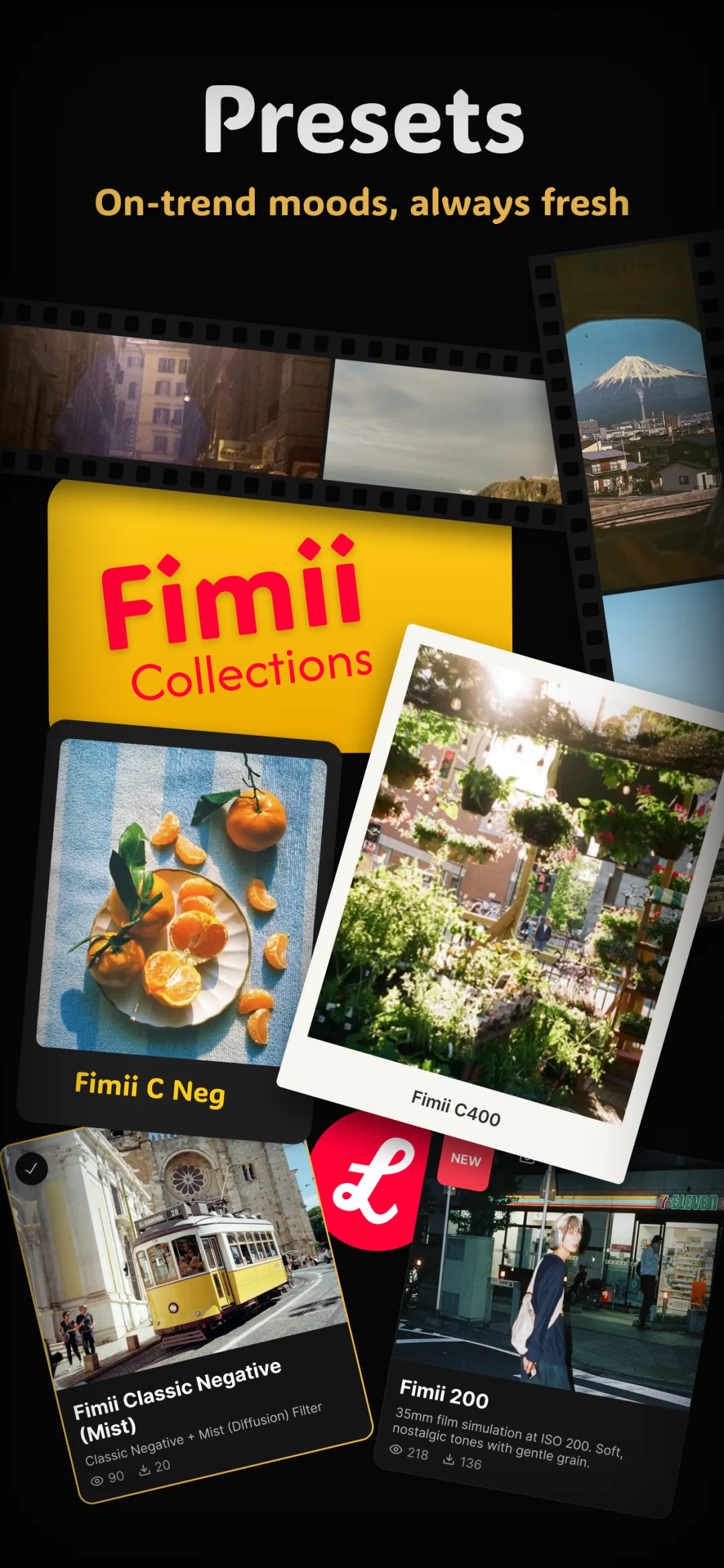
All of these looks are approximations built from the same toolkit, and Fimii puts that toolkit in one app: handcrafted film presets and community collections as starting points; pro color grading with wheels, HSL, and tone curves to steer each palette; and film effects like grain, halation, light leaks, and vignettes to finish. True 16-bit RAW develop keeps color smooth as you push it, and everything is non-destructive, so you can compare looks freely. There is even an optional AI look-match that tunes the sliders toward a reference photo without ever repainting or faking your image. Fimii is free to download with a one-time unlock — no subscription — and currently sits at 4.9 from 1,000+ ratings.
Emulate Portra, Gold, Ektar, CineStill, Superia, black & white, and Lomo cross-process — all in one app, with handcrafted presets, pro color grading, and real film effects. Free to download, one-time unlock, no subscription.
Get Fimii — free to download